
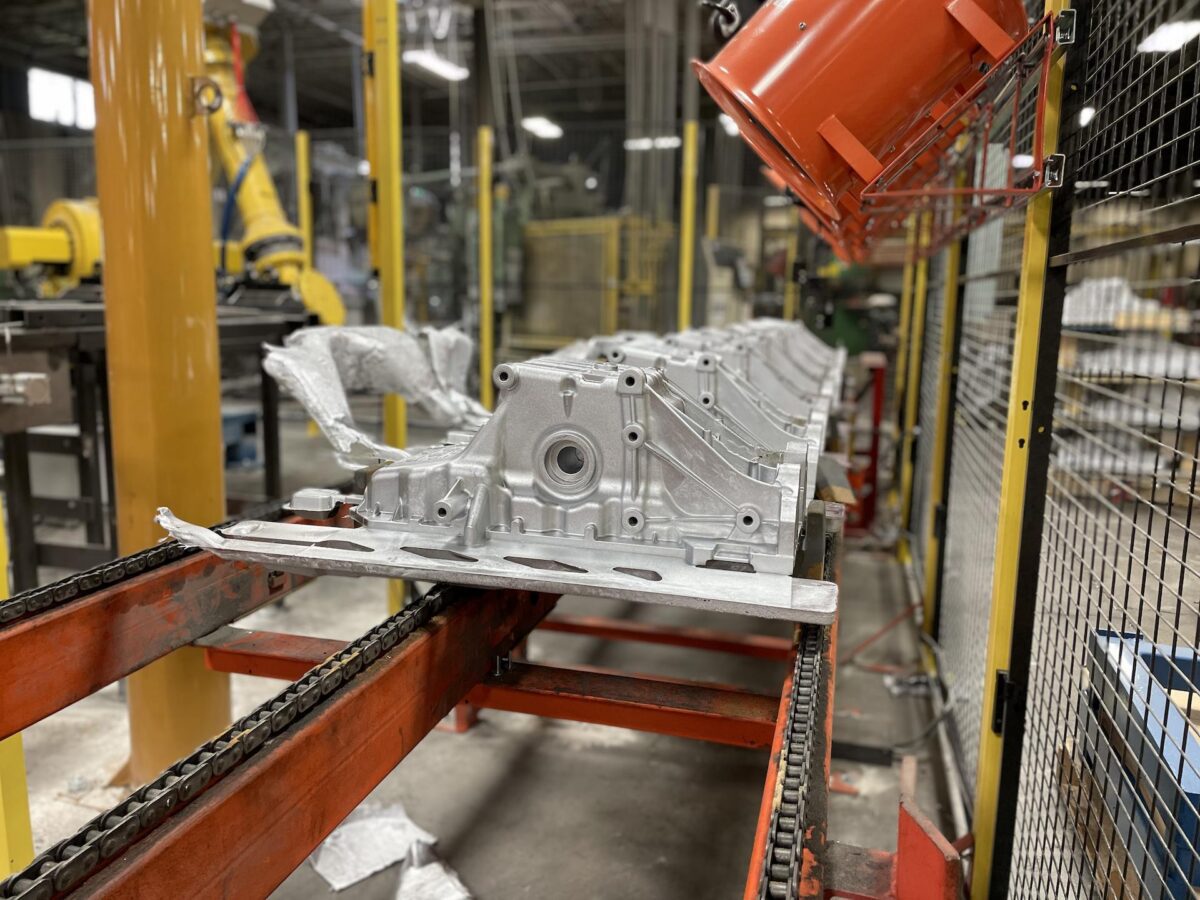
Choosing the right aluminum casting partner is one of the most important decisions an OEM or manufacturer can make. Your foundry impacts not only per-part pricing, but also quality, lead times, scalability, warranty risk, and long-term supply chain stability.
While many suppliers can pour aluminum, not all have the engineering expertise, automation, quality systems, and machining capabilities necessary to consistently deliver high-performance cast components.
Below are the key factors you should evaluate when selecting an aluminum casting partner.
1. Engineering & Design for Manufacturability (DFM) Support
A strong casting partner does more than quote prints. They actively collaborate in the early stages of product development.
Look for a foundry that provides:
- Design for Manufacturability (DFM) analysis
- Gating and riser optimization
- Wall thickness recommendations
- Alloy selection guidance
- Machining allowance planning
- Early risk assessment for porosity or shrinkage
Early engineering involvement often reduces tooling revisions, lowers scrap rates, and shortens time to production.
A partner with in-house engineering expertise can help optimize your part before it ever reaches the mold.
2. Process Capabilities That Match Your Application
Different applications require different casting methods. Your supplier should have a process portfolio aligned with your needs.
Evaluate whether they offer:
- Permanent mold casting
- Semi-permanent mold casting
- Tilt-pour systems
- Sand casting (if needed)
- Heat treatment capabilities
For medium-to-high volume programs requiring strong mechanical properties and repeatability, permanent or semi-permanent mold casting often provides superior results.
The key is selecting a foundry that recommends the right process – not just the one they happen to offer.
3. Advanced Automation & Process Control
Automation improves consistency, safety, and long-term reliability.
Look for evidence of:
- Automated pouring systems
- Robotic trimming and finishing
- Statistical process control
- Integrated production monitoring
- Automated quality validation
Automation reduces variability and improves part-to-part repeatability – especially important in high-volume production environments.
4. Comprehensive Quality Systems
Quality control should be integrated throughout the casting process – not just at final inspection.
Ask whether the foundry uses:
- Real-time X-ray inspection
- Spectrometer alloy verification
- Tensile, yield, and elongation testing
- Leak testing (helium pressure decay or air-under-water)
- CMM dimensional inspection
- Documented traceability systems
Industries such as hydraulics, automotive, power generation, robotics, and defense often require strict compliance and documentation.
A casting partner with advanced inspection systems reduces risk and protects your brand.
5. In-House CNC Machining Capabilities
Many aluminum castings require precision machining before assembly.
A foundry with integrated CNC machining offers advantages such as:
- Shorter lead times
- Reduced handling and shipping
- Better dimensional control
- Faster issue resolution
- Lower total program risk
Evaluate whether the supplier can perform:
- CNC milling
- CNC turning
- Drilling, tapping, and threading
- Precision boring and reaming
- Flatness control on sealing surfaces
Integrated machining improves overall quality consistency and simplifies supply chain management.
6. Production Capacity & Scalability
Your aluminum casting partner should be able to grow with you.
Assess:
- Available production capacity
- Multi-shift capability
- Automation scalability
- Tooling maintenance programs
- Contingency planning
A supplier that struggles with capacity can create costly bottlenecks. Scalability is especially important for long-term OEM programs.
7. Proven Experience in Your Industry
Industry experience matters. A foundry familiar with your application understands:
- Regulatory requirements
- Performance expectations
- Common failure risks
- Testing protocols
- Documentation standards
For example:
- Hydraulic components require leak testing precision
- Automotive parts demand tight tolerance control
- Power generation components may require enhanced metallurgical performance
Experience reduces learning curves and protects your program timeline.
8. Transparency in Pricing & Total Cost of Ownership
Lowest price does not always mean lowest total cost.
A reliable casting partner should clearly explain:
- Tooling costs
- Volume-based pricing structure
- Machining impact
- Quality testing requirements
- Long-term production efficiencies
Evaluate total cost of ownership, including:
- Scrap rate
- Field performance reliability
- Lead time stability
- Warranty risk
A slightly higher per-part price may result in significantly lower long-term risk.
9. Communication & Responsiveness
Strong communication is critical to program success.
Your partner should provide:
- Clear timelines
- Engineering collaboration
- Transparent production updates
- Responsive issue resolution
- Ongoing process improvement discussions
A foundry that operates as a strategic partner – not just a supplier – creates long-term value.
10. Long-Term Stability & Investment in Technology
Finally, evaluate the foundry’s commitment to future growth.
Look for:
- Continued investment in automation
- Facility upgrades
- Modern machining centers
- Quality system enhancements
- Workforce development
A partner that reinvests in technology and infrastructure is positioned to support your needs for years—not just today.
Choosing the Right Aluminum Casting Partner Matters
Your casting supplier impacts:
- Product performance
- Production timelines
- Supply chain stability
- Quality consistency
- Brand reputation
Selecting a partner with strong engineering support, advanced automation, integrated machining, and rigorous quality systems ensures your aluminum cast components meet demanding specifications reliably.
Ready to Evaluate Your Aluminum Casting Partner?
If you are reviewing suppliers or launching a new casting program, our engineering team can help assess your part design and production requirements.
Contact us today to discuss your aluminum casting needs and explore how a fully integrated foundry partner can support your next project.