
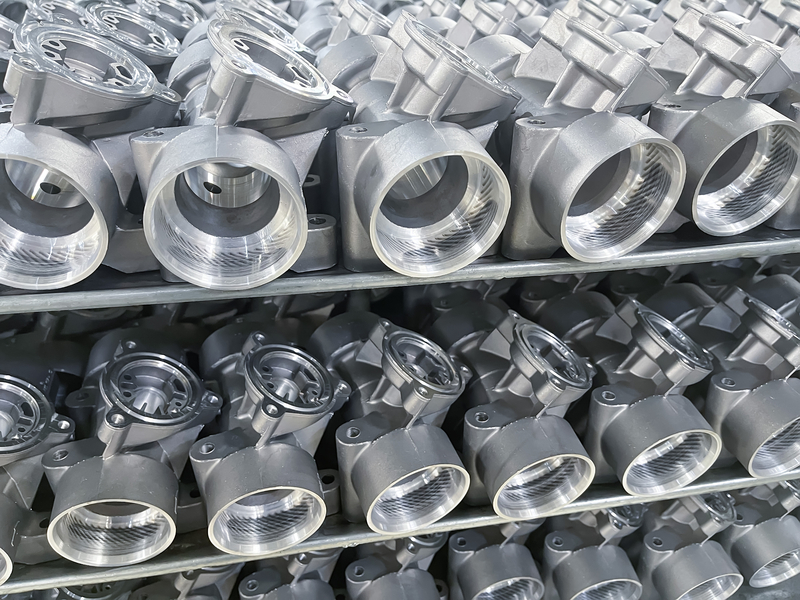
Aluminum casting pricing is not determined by a single variable. Instead, it is influenced by a combination of engineering complexity, production volume, material selection, quality standards, and secondary operations.
For OEMs and manufacturers, understanding these cost drivers helps with budgeting, sourcing decisions, and long-term supplier selection. While per-part pricing is important, the total cost of ownership – including scrap rates, machining efficiency, and long-term performance – often matters even more.
Below is a comprehensive breakdown of the key factors that influence aluminum casting pricing.
1. Part Design & Geometric Complexity
One of the most significant pricing drivers is part design.
Complex geometries increase cost due to:
- Intricate gating requirements
- Additional cores for internal passages
- Increased risk of porosity
- More advanced tooling
- Longer cycle times
Thin walls, sharp corners, and deep cavities require additional engineering attention to ensure proper metal flow and solidification. Optimizing a design through early Design for Manufacturability (DFM) review can significantly reduce production costs.
Well-designed parts cast more efficiently, reduce scrap, and improve yield.
2. Tooling & Mold Costs
Tooling is a major upfront investment in aluminum casting.
Pricing depends on:
- Mold size
- Number of cavities
- Permanent vs. semi-permanent mold requirements
- Cooling channel complexity
- Core box design
Permanent mold tooling typically carries higher upfront costs than sand casting but delivers lower per-part pricing in medium to high production volumes due to improved repeatability and reduced labor.
Tooling longevity and maintenance requirements also factor into long-term cost projections.
3. Production Volume
Volume has a direct impact on cost per casting.
Higher production volumes allow:
- Tooling amortization over more units
- Improved production efficiency
- Reduced setup cost per part
- Better automation utilization
Low-volume production may justify sand casting, while medium-to-high volume programs often benefit from permanent mold or semi-permanent mold processes.
Forecast accuracy also influences pricing. Stable, long-term production schedules reduce risk and improve cost efficiency.
4. Aluminum Alloy Selection
Different aluminum alloys carry different costs and processing requirements.
Pricing is influenced by:
- Raw material market fluctuations
- Alloy composition
- Strength and heat treatment requirements
- Machinability characteristics
Higher-performance alloys may require additional processing controls or heat treatment, increasing production costs. However, selecting the correct alloy can improve durability and reduce long-term failure risk.
Material market volatility also impacts pricing, especially when aluminum commodity prices shift.
5. Casting Process Selection
The casting method significantly affects pricing.
Permanent Mold Casting
- Higher tooling investment
- Lower per-part cost at scale
- Strong mechanical properties
- Improved repeatability
Semi-Permanent Mold Casting
- Allows complex internal cores
- Slightly higher processing complexity
Sand Casting
- Lower tooling investment
- Higher per-part labor cost
- Best for low-volume or large parts
Choosing the appropriate process for volume and application is critical to balancing upfront and long-term costs.
6. Machining & Secondary Operations
Many aluminum castings require precision CNC machining after casting.
Machining costs depend on:
- Tolerance requirements
- Number of machined surfaces
- Threading and tapping requirements
- Precision boring or flatness control
- Cycle time per operation
Tight tolerances increase setup time, tooling wear, and inspection requirements. Complex machined features can sometimes be redesigned into the casting to reduce secondary machining costs.
Integrating in-house machining often reduces total program cost by minimizing handling and improving quality control.
7. Quality Control & Testing Requirements
Higher quality standards can increase cost – but reduce long-term risk.
Pricing is affected by required inspections such as:
- Real-time X-ray inspection
- Helium pressure decay leak testing
- Air-under-water leak testing
- Tensile, yield, and elongation testing
- Dimensional CMM inspection
- Alloy spectrometer verification
Critical applications – such as hydraulics, automotive, or defense components – often require more extensive validation protocols.
While these quality systems add to production cost, they significantly reduce failure risk and warranty exposure.
8. Scrap Rate & Process Efficiency
Foundries with advanced automation and process control often achieve lower scrap rates.
High scrap rates increase pricing because:
- More material is consumed
- Additional labor is required
- Machine time is wasted
- Tooling wear increases
Investments in automated pouring systems, robotic finishing, and statistical process control improve yield and reduce variability – ultimately stabilizing pricing over time.
9. Heat Treatment Requirements
Some castings require heat treatment to achieve specific mechanical properties.
Additional costs may include:
- Furnace time
- Energy consumption
- Quenching systems
- Additional handling
Heat-treated parts often deliver improved strength and fatigue resistance but require additional processing stages.
10. Surface Finishing & Coatings
Surface treatments can add cost depending on requirements.
Common finishing processes include:
- Shot blasting
- Powder coating
- Anodizing
- Painting
- Protective coatings
Finishing may be necessary for corrosion resistance, appearance, or regulatory compliance.
11. Packaging & Logistics
Packaging requirements also influence pricing.
Factors include:
- Custom palletization
- Protective inserts
- Export packaging
- Barcoding and traceability systems
Shipping distance and freight considerations further impact total delivered cost.
12. Market Conditions & Supply Chain Factors
External variables also affect aluminum casting pricing, including:
- Aluminum commodity pricing
- Energy costs
- Labor market conditions
- Regulatory requirements
- Global supply chain disruptions
Foundries with vertically integrated capabilities and stable supplier networks often provide more consistent long-term pricing.
Understanding Total Cost of Ownership
While unit price matters, experienced OEMs evaluate total program value.
A lower-cost casting that requires excessive machining, rework, or warranty replacement may ultimately cost more than a precision-engineered casting produced under strict quality controls.
Long-term cost considerations include:
- Yield rates
- Machining efficiency
- Reliability in field performance
- Lead time consistency
- Supplier stability
Selecting a casting partner based solely on lowest price can introduce risk into the supply chain.
Partner With a Foundry That Optimizes Cost & Quality
Aluminum casting pricing reflects engineering complexity, production volume, material selection, machining requirements, and quality standards. The most cost-effective solution is often achieved through early collaboration, optimized design, and a fully integrated manufacturing approach.
If you’re evaluating aluminum casting suppliers and want clarity on cost drivers, our engineering team can review your design and provide guidance on process optimization and long-term value.
Contact us today to discuss your aluminum casting project and request a detailed quote.