
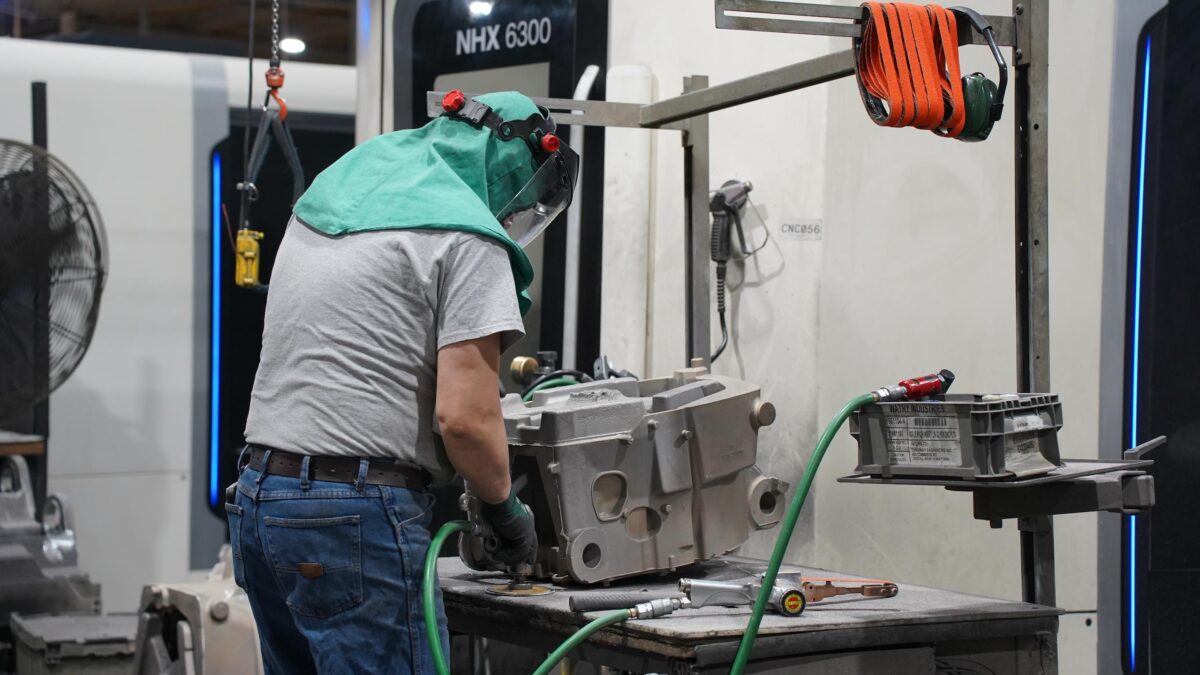
In-house machining allows an aluminum foundry to control both casting and precision finishing within a single, integrated production environment. This approach improves efficiency, reduces variability, and ensures that components meet exact engineering specifications without delays between production stages.
For OEMs and procurement teams, in-house machining is not just a convenience. It is a critical factor in achieving consistent quality, reliable delivery timelines, and cost-effective production.
Why Does In-House Machining Reduce Lead Times?
When machining is performed in-house, parts move directly from casting to finishing without leaving the facility.
This eliminates:
- Transportation delays between vendors
- Scheduling conflicts with third-party machine shops
- Additional handling and queue times
As a result, production flows continuously, allowing manufacturers to complete projects faster and maintain more predictable delivery schedules.
How Does In-House Machining Improve Quality Control?
Quality control is significantly enhanced when machining is integrated with casting operations.
Manufacturers can:
- Inspect parts immediately after casting
- Adjust machining processes based on casting results
- Maintain consistent tolerances across production runs
- Ensure alignment between design intent and final dimensions
This level of control reduces the risk of defects and improves overall part quality.
What Impact Does Integration Have on Process Efficiency?
Integration between casting and machining improves coordination across all stages of production.
Benefits include:
- Streamlined communication between teams
- Faster response to production issues
- Reduced downtime between operations
- More efficient scheduling and workflow management
This creates a more stable and efficient manufacturing process.
How Does In-House Machining Support Tight Tolerances?
Precision machining is required to meet tight tolerances that casting alone cannot achieve.
In-house machining enables:
- Direct control over machining parameters
- Consistent setup and fixturing across runs
- Immediate adjustments based on inspection results
This ensures that parts meet exact specifications without relying on external vendors.
Why Does In-House Machining Improve Repeatability?
Repeatability is essential for both low-volume and high-volume production.
In-house machining supports repeatability through:
- Standardized machining processes
- Automated machining cells for consistent cycle times
- Controlled fixturing and tooling setups
This allows manufacturers to produce identical parts across production runs with minimal variation.
How Does In-House Machining Reduce Costs?
While in-house machining requires investment in equipment and expertise, it can reduce overall production costs.
Cost savings come from:
- Eliminating outsourcing expenses
- Reducing transportation and handling costs
- Minimizing rework and scrap
- Improving production efficiency
Over time, these factors contribute to more competitive pricing and better value for OEMs.
What Role Does Automation Play in In-House Machining?
Automation enhances the benefits of in-house machining by improving efficiency and consistency.
Automated machining systems provide:
- Continuous operation with minimal manual intervention
- Predictable cycle times
- Reduced risk of human error
- Increased production throughput
These capabilities are especially important for high-volume manufacturing environments.
How Does In-House Machining Improve Communication?
When machining is handled internally, communication between casting and machining teams becomes more direct.
This allows for:
- Faster problem-solving
- Immediate feedback on casting performance
- Better alignment between production stages
Improved communication reduces delays and helps maintain consistent production quality.
Why Is In-House Machining Important for Complex Components?
Complex components often require precise machining to achieve functional features and tight tolerances.
In-house machining enables:
- Close coordination between casting design and machining strategy
- Efficient handling of complex geometries
- Accurate alignment of multiple features within a single part
This ensures that even complex components meet performance requirements.
What Should OEMs Consider When Evaluating Machining Capabilities?
When selecting a manufacturing partner, machining capabilities should be evaluated alongside casting expertise.
Key considerations include:
- Availability of multi-axis machining centers
- Level of automation in machining operations
- Integration with casting and finishing processes
- Experience with similar part requirements
Manufacturers with strong in-house machining capabilities are better positioned to deliver complete, high-quality components.
Conclusion: In-House Machining Strengthens the Entire Production Process
In-house machining is a critical component of modern aluminum foundry operations. It improves quality, reduces lead times, and enhances overall production efficiency.
By integrating machining with casting, manufacturers can deliver consistent, precision components while maintaining control over every stage of production.
Ready to Streamline Your Production With Integrated Machining?
If your application requires precision, consistency, and reliable delivery, working with a foundry that offers in-house machining can provide significant advantages.
At Watry Industries, machining is fully integrated with casting operations, supported by automated systems and process control to deliver high-precision components efficiently and consistently.
Speak with our team to discuss your machining and production requirements.