
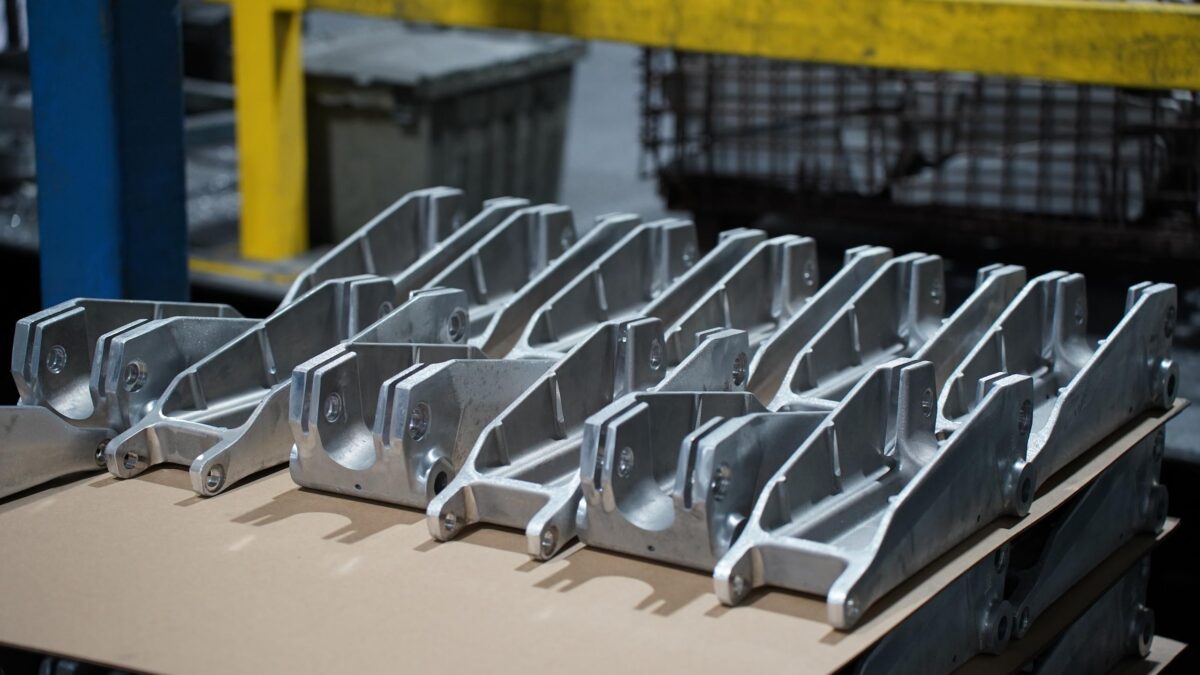
Supply chain disruptions can affect aluminum casting production by creating uncertainty around materials, transportation, supplier availability, production scheduling, and downstream manufacturing operations. For OEMs, a disruption at one stage can influence lead times and production planning across an entire component program.
Reducing that exposure requires more than reacting when a delay occurs. OEMs benefit from manufacturing partners with controlled production systems, scalable capacity, integrated secondary operations, and the ability to manage more of the component manufacturing process within one operation.
Watry Industries combines permanent mold aluminum casting, CNC machining, engineering, finishing, and value-added manufacturing at its Sheboygan, Wisconsin facility. This integrated approach gives OEM manufacturers a more streamlined production path from casting through finished components.
Where Can Supply Chain Disruptions Affect Aluminum Casting Production?
Aluminum casting programs depend on multiple connected manufacturing activities.
In general, disruptions affecting raw materials, transportation, outside processing, equipment availability, or production scheduling can create delays that move through the rest of the supply chain.
For an OEM component, the manufacturing sequence may involve:
- Aluminum casting
- Tooling and fixture requirements
- CNC machining
- Heat treating
- Coating or finishing
- Inspection
- Assembly
- Packaging
- Transportation
When these processes are divided among several suppliers, a delay at one stage may prevent the next operation from beginning on schedule.
That is why supply chain planning should consider the entire manufacturing process rather than only the casting operation.
How Can Multiple Suppliers Increase Supply Chain Complexity?
Each additional supplier introduces another handoff in the manufacturing process.
If one company produces the casting, another performs machining, another handles coating, and another completes assembly, the OEM must coordinate multiple schedules and transportation steps.
Additional handoffs may also mean more:
- Purchase orders
- Production schedules
- Shipments
- Receiving operations
- Quality coordination
- Supplier communication
The more fragmented the manufacturing process becomes, the more coordination is required to keep the component moving.
Watry reduces this fragmentation by providing permanent mold casting, precision CNC machining, heat treating, powder coating, finishing, sub-assembly, and other value-added services through one manufacturing operation.
This allows OEMs to source raw castings, machined components, or more fully finished assemblies depending on program requirements.
How Can Integrated Manufacturing Reduce Production Handoffs?
Integrated manufacturing keeps more stages of component production under one manufacturing partner.
Watry’s capabilities include:
- Permanent mold aluminum casting
- Semi-permanent mold casting
- Traditional tilt pour casting
- Reverse tilt pour casting
- Sand core integration
- Horizontal and vertical CNC machining
- Heat treating
- In-house powder coating
- Specialty finishing
- Sub-assembly
- Pad printing
When casting and secondary processes are coordinated within the same operation, components do not need to move between as many unrelated suppliers.
This can simplify production planning and provide greater continuity from the foundry through downstream manufacturing.
For OEM procurement teams, fewer handoffs can also make it easier to communicate changing production requirements through a single manufacturing relationship.
How Does Automation Help Maintain Predictable Production?
Production consistency becomes especially important when manufacturing schedules are under pressure.
Watry uses robotic pouring and extraction systems along with automated machining and finishing cells. Automation helps create repeatable production sequences while reducing labor variability.
These systems support:
- Repeatable manufacturing cycles
- Consistent component handling
- Efficient production flow
- Increased throughput
- Reduced labor variability
- Scalable production
Watry’s universal mold mounting system also supports efficient setup and tooling changes.
Together, automation and standardized production systems provide a more controlled manufacturing environment.
While automation cannot eliminate every potential supply chain issue, it can reduce unnecessary variability within the production processes a manufacturer directly controls.
Why Does Production Scalability Matter During Changing Demand?
Supply chain disruptions are not always caused by shortages. Changes in OEM demand can also place pressure on manufacturing capacity.
A supplier that performs well at one production level may not necessarily have the systems required to support a significantly larger program.
Watry supports production volumes ranging from approximately 300 parts annually to more than 600,000 parts per year.
Its automated manufacturing systems are designed to support production across that broad range.
Scalable capacity can help OEMs work with the same manufacturing partner as program requirements change rather than automatically moving a component to another supplier when volume increases.
Maintaining continuity in the supplier relationship can reduce the additional tooling, qualification, and process coordination involved in changing manufacturing sources.
How Can Engineering Support Prevent Production Problems?
Some supply chain problems begin as manufacturing problems.
A component that is difficult to cast, machine, or finish may require additional operations or specialized processing that increases production complexity.
Watry provides:
- Casting design consultation
- Engineering support
- Simulation
- CAD design for molds and fixtures
- Mold and fixture design and build
These capabilities allow manufacturability to be considered before the component enters full production.
Engineering teams can evaluate tooling, casting geometry, sand core requirements, machining considerations, and downstream manufacturing needs as part of a connected process.
Reducing avoidable production complexity can make a component easier to manage throughout its manufacturing life cycle.
How Does In-House CNC Machining Affect Supply Chain Reliability?
Many aluminum castings require machining before they can be used in an OEM assembly.
When machining is outsourced to a separate supplier, every casting must move from one manufacturer’s production schedule into another.
Watry provides precision CNC machining using horizontal and vertical machining centers within the same manufacturing operation as its aluminum casting processes.
This integration allows casting and machining requirements to be coordinated together.
It also eliminates one potential supplier handoff from programs where Watry produces both the casting and the machined component.
OEM engineers can consider machining stock, fixture requirements, dimensional relationships, and casting geometry earlier in the production process instead of addressing those requirements only after casting is complete.
Can In-House Finishing Simplify the Supply Chain?
Finishing can introduce additional steps after casting and machining.
Watry’s manufacturing capabilities include heat treating, powder coating, specialty finishing, pad printing, and sub-assembly.
Its in-house powder coating operation includes a multi-stage wash system, while heat treating options include T4, T5, T6, T7, and variations.
Integrating these processes gives OEMs the option to source components at different levels of completion.
For example, Watry can supply:
- Raw aluminum castings
- Machined castings
- Finished components
- Coated components
- Sub-assembled components
The ability to consolidate these operations can reduce the number of suppliers required to complete an OEM component.
How Does Quality Control Help Prevent Additional Production Disruptions?
A production delay becomes more difficult when quality problems require parts to be reworked or manufacturing processes to be adjusted.
Watry maintains an ISO 9001:2015 quality management system and supports production with dimensional inspection, process control systems, continuous improvement, and vision inspection for assembly validation.
Quality is managed throughout manufacturing rather than treated only as a final inspection step.
Watry also uses automated casting and machining systems to support repeatability and dimensional consistency.
For OEM programs, controlled manufacturing helps reduce variability within the areas the supplier can directly manage.
Why Can U.S.-Based Manufacturing Matter to OEM Supply Chains?
Watry operates from a single manufacturing facility in Sheboygan, Wisconsin and manufactures its aluminum castings in the USA.
For manufacturers sourcing components domestically, a U.S.-based aluminum casting and machining supplier can provide another option when developing a broader sourcing strategy.
Watry serves manufacturers nationwide while also supplying OEMs globally.
Its single-facility model combines casting, machining, engineering, finishing, and other value-added manufacturing capabilities within the same operation rather than presenting those services as separate locations.
For procurement teams, understanding exactly where and how a component is manufactured can make supply chain planning more straightforward.
What Should OEMs Look for in an Aluminum Casting Supplier During Supply Chain Planning?
OEM teams should evaluate more than whether a foundry can produce a required aluminum component.
Questions worth considering include:
- How much of the production process can the supplier manage internally?
- Can the supplier provide machining after casting?
- Are finishing and assembly capabilities available?
- Can production scale if demand changes?
- What automation is used to support repeatability?
- Does the supplier provide in-house engineering and tooling support?
- How is dimensional consistency verified?
- Is the quality management system documented?
- How many external handoffs are required before the component is complete?
The answers help procurement and engineering teams understand how much manufacturing coordination may be required throughout the program.
How Can Watry Help OEMs Build a More Integrated Aluminum Casting Supply Chain?
Watry Industries combines automated permanent mold aluminum casting with precision CNC machining, engineering, tooling, finishing, quality control, and value-added manufacturing.
Its robotic systems, universal mold mounting system, scalable production capacity, and integrated manufacturing capabilities are designed to support efficient, repeatable OEM production.
Watry manufactures aluminum castings ranging from approximately 1 pound to more than 150 pounds and supports annual production from roughly 300 pieces to more than 600,000 parts.
By consolidating more manufacturing stages through one U.S.-based supplier, OEMs can reduce production handoffs and simplify the coordination required to move a component from casting through downstream operations.
Speak with the Watry team to discuss your aluminum casting requirements, production volumes, machining needs, and manufacturing strategy.
Frequently Asked Questions About Aluminum Casting Supply Chains
How can supplier consolidation help an aluminum casting program?
Using one supplier for casting, machining, finishing, and other value-added operations can reduce the number of manufacturing handoffs and supplier relationships that an OEM needs to coordinate.
Does Watry provide CNC machining in addition to aluminum casting?
Yes. Watry provides precision CNC machining using horizontal and vertical machining centers within the same manufacturing operation as its permanent mold aluminum casting processes.
Can Watry provide finishing services for aluminum castings?
Yes. Watry’s capabilities include heat treating, in-house powder coating, specialty finishing, pad printing, and sub-assembly.
Can Watry support changing production volumes?
Watry supports production programs ranging from approximately 300 pieces annually to more than 600,000 parts per year.
Where are Watry aluminum castings manufactured?
Watry Industries operates a single manufacturing facility in Sheboygan, Wisconsin. Its aluminum castings are manufactured in the USA while the company serves manufacturers nationwide and supplies OEMs globally.