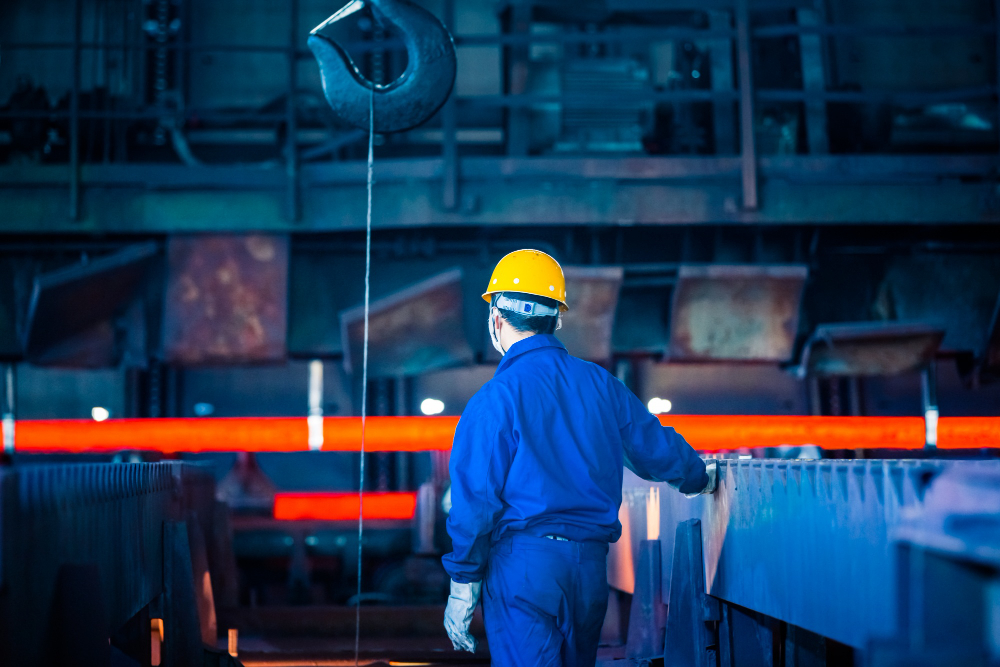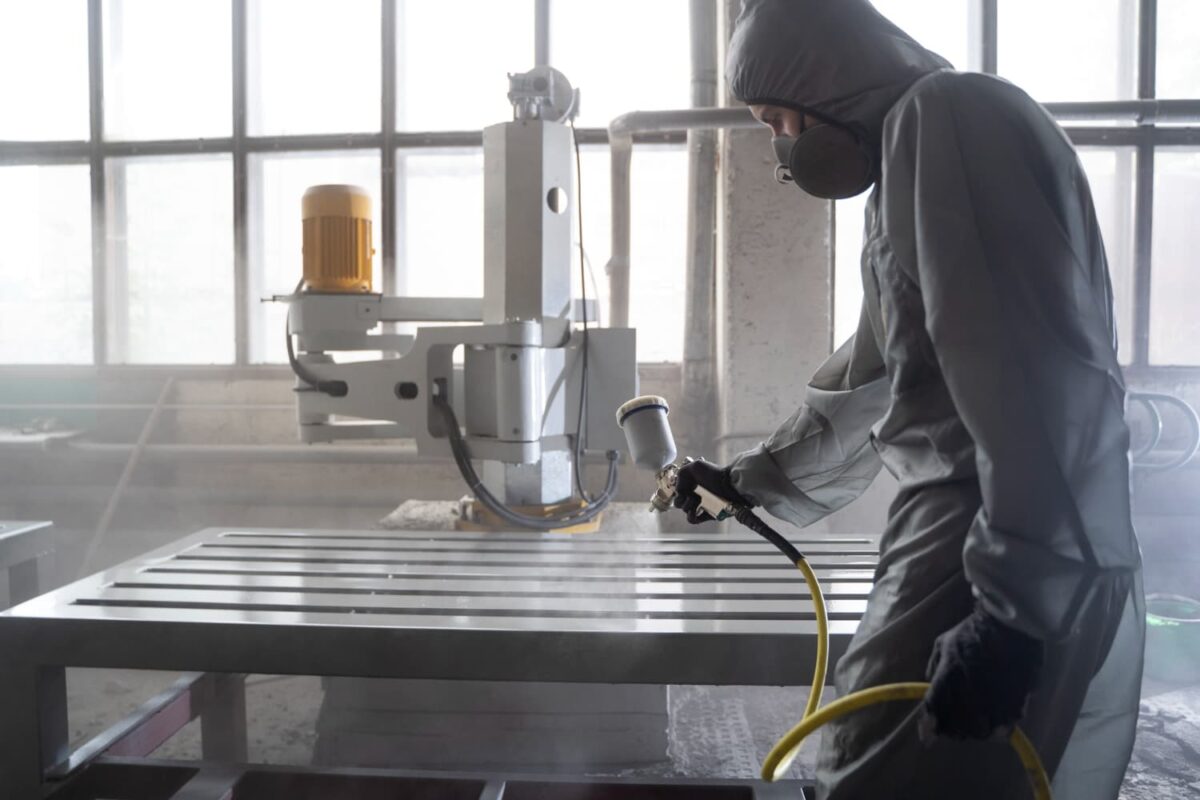
The aluminum casting process is a proven way to manufacture strong, lightweight metal components for industries that demand reliability, repeatable quality, and tight tolerances. While there are multiple casting methods – such as permanent mold, semi-permanent mold, and sand casting—the core production stages follow a similar step-by-step workflow.
Below is a clear, practical breakdown of the aluminum casting process used in modern foundries to produce high-performance cast components.
Step 1: Part Review, Engineering, and DFM Planning
Before any metal is poured, the foundry evaluates the part’s design and application requirements. This is where engineering teams confirm:
- Performance requirements and load conditions
- Wall thickness consistency and casting feasibility
- Internal features that may require cores
- Machining allowances and critical tolerances
- Aluminum alloy selection
- Quality and testing requirements
Design for Manufacturability (DFM) helps reduce risk, prevent casting defects, and lower total program cost.
Step 2: Tooling Design and Mold Manufacturing
Once the design is approved, the next step is building the mold system. The tooling approach depends on the casting method:
- Permanent mold casting: reusable steel molds
- Semi-permanent mold casting: steel molds plus sand cores
- Sand casting: expendable sand molds (lower tooling cost, flexible geometry)
Mold design includes gating and risers to control metal flow and compensate for shrinkage during solidification.
Step 3: Core Making (If the Part Needs Internal Cavities)
If the casting requires internal passages, cavities, or complex geometry (common in hydraulic and fluid-handling components), sand cores are produced separately.
Cores must be:
- Dimensionally accurate
- Strong enough to withstand metal pressure
- Properly vented to reduce gas defects
The cores are placed inside the mold before pouring.
Step 4: Melting the Aluminum Alloy
Aluminum ingot and recycled material are melted in a controlled furnace to reach the correct temperature and chemistry.
During melting, the foundry typically performs:
- Spectrometer testing to confirm alloy chemistry
- Degassing to remove dissolved hydrogen
- Dross removal and cleanliness controls
- Temperature monitoring for consistent pouring
This step is critical because alloy chemistry and melt quality directly affect mechanical properties and defect rates.
Step 5: Preparing the Mold for Pouring
Before pouring, the mold is prepared to support consistent fill and proper solidification.
This may include:
- Preheating the mold to a controlled temperature
- Applying mold coatings and release agents
- Setting the cores in place (if required)
- Verifying gating, vents, and alignment
Proper mold prep helps reduce porosity, improve surface finish, and stabilize repeatability.
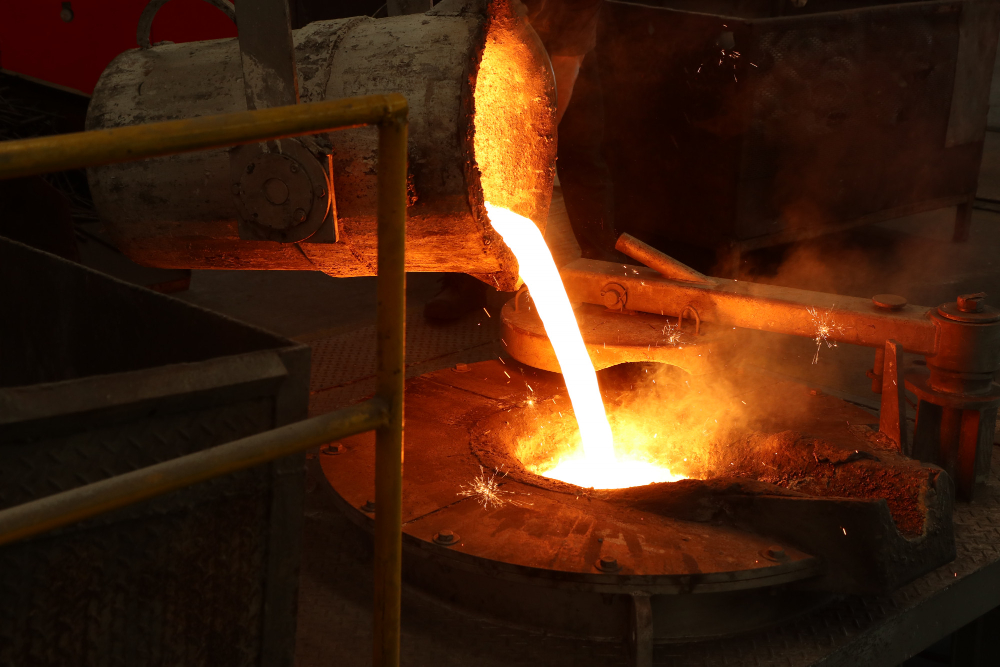
Step 6: Pouring the Molten Aluminum into the Mold
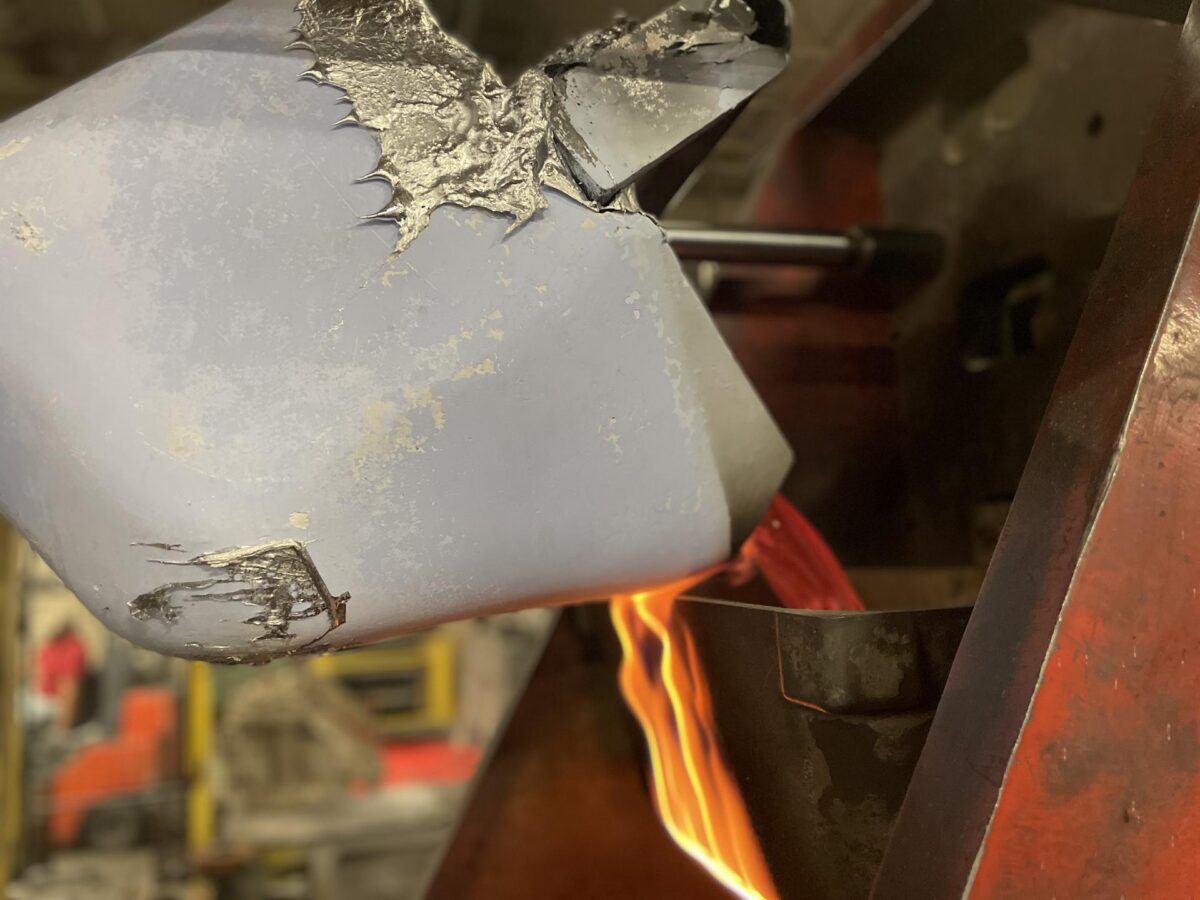
Molten aluminum is poured into the mold using a controlled method (often automated in advanced foundries).
A controlled pour reduces:
- Turbulence
- Air entrapment
- Oxide formation
- Gas-related porosity
Tilt-pour and other automated pouring systems are commonly used to improve consistency and reduce defects.
Step 7: Cooling and Solidification
Once poured, the aluminum cools and solidifies inside the mold.
Solidification control impacts:
- Grain structure and strength
- Shrinkage behavior
- Internal integrity (voids/porosity)
- Dimensional stability
Permanent mold and semi-permanent mold processes generally create faster cooling rates than sand casting, which can improve mechanical properties.
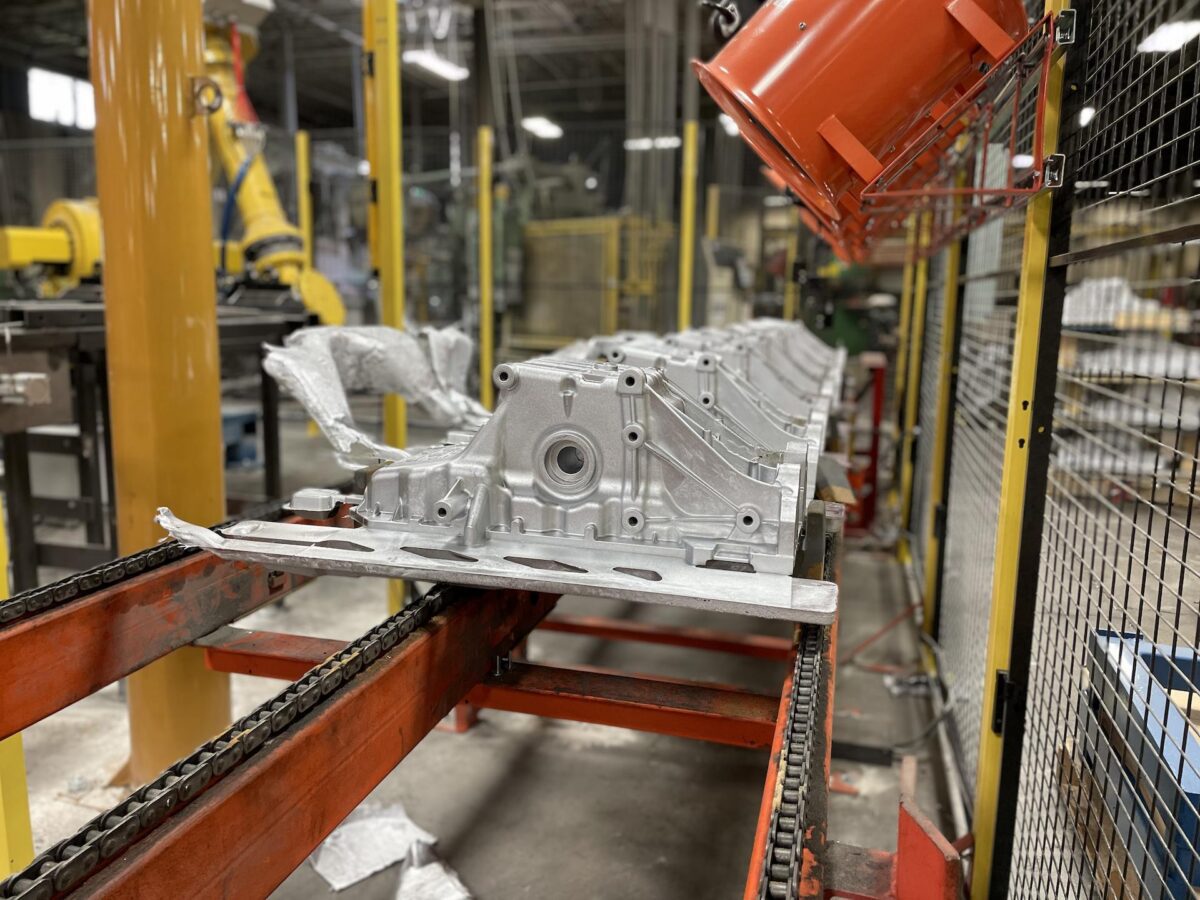
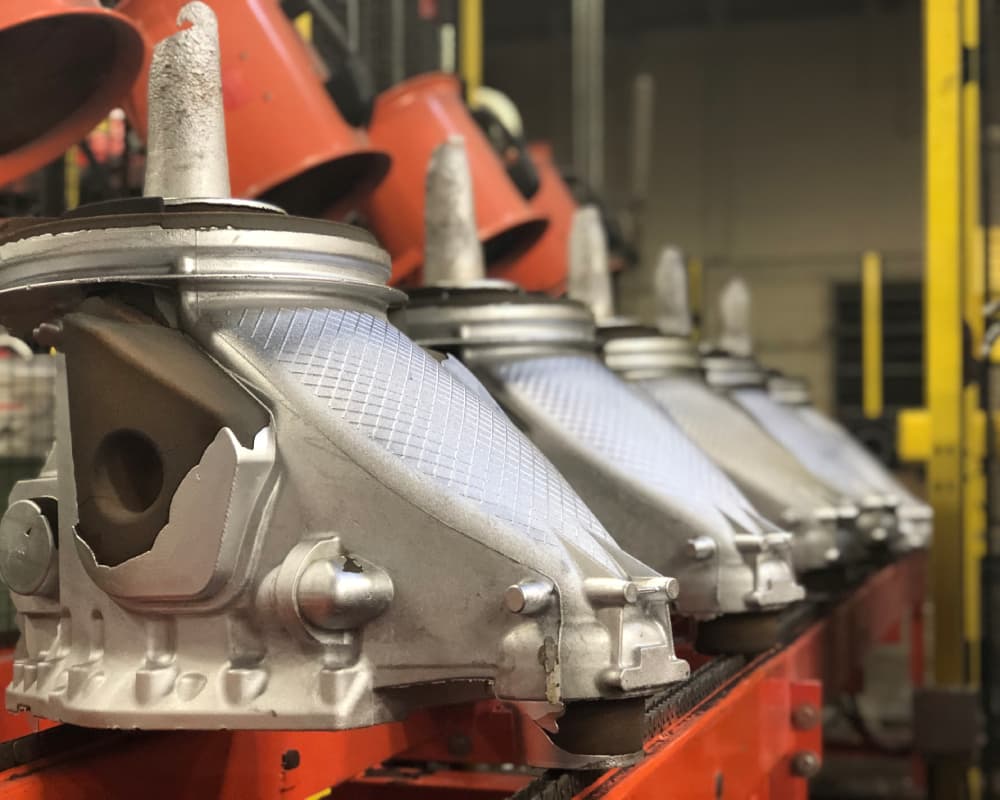
Step 8: Casting Removal and Trim Operations
After solidification, the casting is removed from the mold and initial cleanup begins.
This includes:
- Removing gates and runners
- Trimming flash
- Cleaning the surface
- Separating the casting from any attached feed systems
At this stage, the part is “near-net shape” but not typically finished.
Step 9: Heat Treatment (When Required)
Many aluminum castings are heat treated to achieve higher strength, hardness, and fatigue performance.
Heat treatment may include:
- Solution heat treatment
- Quenching
- Artificial aging
Not every casting requires heat treatment, but it is common for structural parts and high-performance applications.
Step 10: Cleaning, Surface Finishing, and Deburring
To prepare the casting for machining and assembly, foundries may apply:
- Shot blasting
- Grinding and deburring
- Robotic finishing (for consistency)
- Surface preparation for coating (if needed)
Surface finishing improves appearance, removes sharp edges, and supports downstream machining accuracy.
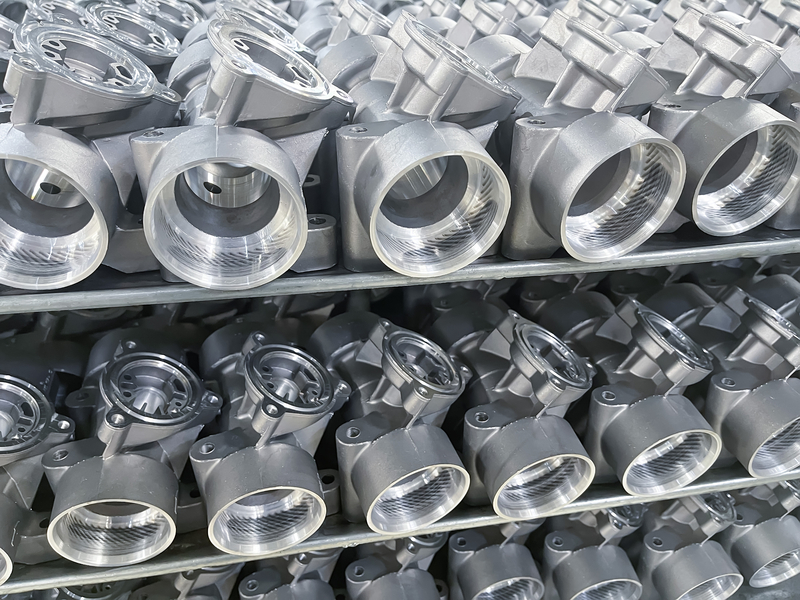
Step 11: CNC Machining and Secondary Operations
Most industrial aluminum castings require machining to achieve tight tolerances and functional surfaces.
Common machining operations include:
- CNC milling
- CNC turning
- Drilling, tapping, and threading
- Precision boring and reaming
- Flatness control for sealing surfaces
In-house machining typically improves lead times and provides tighter quality control from casting through final part completion.
Step 12: Inspection, Testing, and Quality Validation
Quality control happens throughout the process, but final validation ensures the part meets specification.
Depending on the application, testing may include:
- Dimensional inspection (including CMM)
- Real-time X-ray inspection for internal defects
- Alloy verification documentation
- Tensile, yield, and elongation testing
- Leak testing (helium pressure decay or air-under-water) for pressure-containing parts
Critical industries – like hydraulics, automotive, defense, and power generation – often require extensive documentation and traceability.
Step 13: Packaging, Traceability, and Shipment
Once approved, the castings are packaged to prevent damage and maintain traceability.
This may include:
- Custom pallets and protective packaging
- Part labeling and barcode tracking
- Inspection documentation and certifications
- Shipping as raw castings or fully machined components
Why the Step-by-Step Process Matters
A dependable aluminum casting isn’t just about the pour. Quality and cost are driven by:
- Engineering and tooling accuracy
- Alloy control and melt cleanliness
- Pouring consistency
- Solidification management
- Machining capability
- Inspection and validation systems
When these steps are tightly controlled, OEMs get castings that perform reliably, assemble correctly, and meet specification consistently.
Need a Casting Partner That Controls Every Step?
If you need aluminum castings produced with repeatable process control, in-house machining, and rigorous quality validation, choosing the right foundry partner is essential.
Contact our team today to discuss your part requirements and get a quote for your next aluminum casting project.