
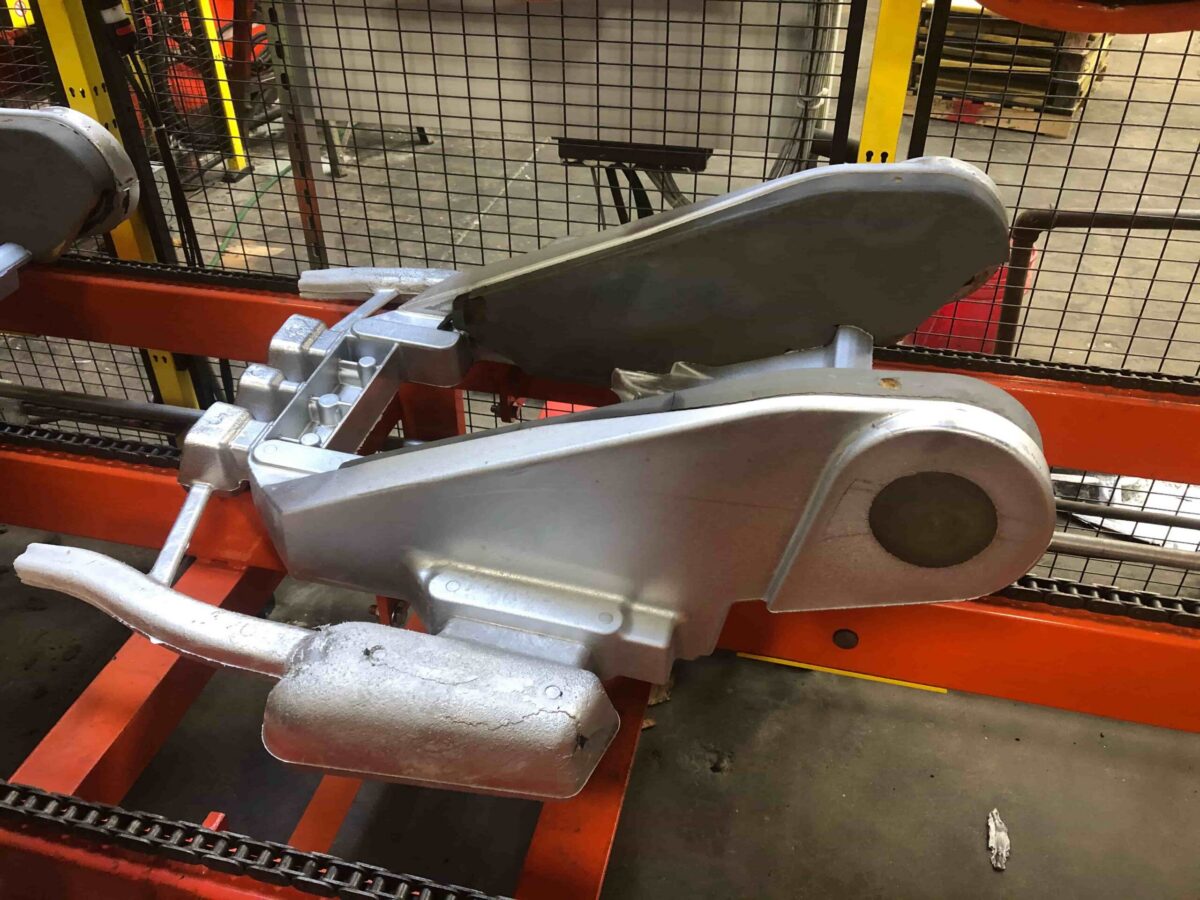
Aluminum castings are precision-engineered metal components created by pouring molten aluminum into a mold cavity where it solidifies into a specific shape. Once cooled, the casting is removed, finished, and often machined to meet exact dimensional and performance specifications.
Aluminum casting is one of the most widely used manufacturing processes in modern industry. From hydraulic housings and automotive components to electrical enclosures and heavy equipment parts, aluminum castings play a critical role in countless applications.
But what exactly defines an aluminum casting, how is it made, and why is aluminum such a preferred material? This guide breaks it down.
What Is Aluminum Casting?
Aluminum casting is a manufacturing process that transforms raw aluminum alloy into a functional component by using molds. The mold determines the final shape, internal geometry, wall thickness, and surface detail of the finished part.
Once the molten aluminum fills the mold and solidifies, the result is a near-net-shape component that requires minimal secondary processing compared to fabrication or machining from solid billet.
Key characteristics of aluminum castings include:
- Lightweight yet strong construction
- Excellent corrosion resistance
- Good thermal and electrical conductivity
- High strength-to-weight ratio
- Strong dimensional stability
- Recyclability
These properties make aluminum castings ideal for industries requiring durability without excessive weight.
How Are Aluminum Castings Made?
Although specific processes vary, the general aluminum casting workflow includes:
1. Mold Design and Tooling
Engineers design a mold based on part geometry, performance requirements, and alloy selection. Proper gating and riser systems are critical to ensure proper metal flow and minimize porosity.
2. Melting the Aluminum Alloy
Aluminum ingots or recycled aluminum are melted in a furnace to a controlled temperature. Chemistry is carefully monitored using spectrometer analysis to ensure the alloy meets required specifications.
3. Pouring the Molten Metal
Molten aluminum is poured into the mold using controlled pouring systems. Precision pouring reduces turbulence and helps prevent defects.
4. Cooling and Solidification
The aluminum cools and solidifies within the mold. Cooling rates influence grain structure and mechanical properties.
5. Shakeout and Finishing
Once solidified, the casting is removed, excess material is trimmed, and the surface is cleaned.
6. Secondary Operations
Many castings undergo CNC machining, drilling, tapping, leak testing, X-ray inspection, and surface finishing to meet final specifications.
Common Types of Aluminum Casting Processes
Different casting methods are used depending on production volume, complexity, and application requirements.
Permanent Mold Casting
Permanent mold casting uses reusable steel molds. This process produces high-quality castings with excellent dimensional repeatability and superior mechanical properties.
Benefits:
- Consistent quality
- Lower porosity
- Improved strength
- Ideal for medium to high production volumes
Semi-Permanent Mold Casting
This process combines permanent molds with sand cores to create complex internal geometries.
Benefits:
- Allows intricate internal passages
- Excellent for hydraulic components
- Strong mechanical properties
Sand Casting
Sand casting uses expendable sand molds and is ideal for larger or lower-volume parts.
Benefits:
- Cost-effective for low volume
- Flexible for large components
- Suitable for complex shapes
Tilt-Pour Casting
Tilt-pour systems improve metal flow control by gradually filling the mold, reducing turbulence and gas entrapment.
Benefits:
- Reduced porosity
- Improved surface finish
- Better mechanical consistency
Why Aluminum Is Used for Castings
Aluminum offers several advantages over other metals:
Lightweight Strength
Aluminum weighs approximately one-third of steel but maintains excellent strength when properly alloyed and heat treated.
Corrosion Resistance
A natural oxide layer protects aluminum from environmental damage, making it ideal for outdoor and high-moisture environments.
Thermal Conductivity
Aluminum efficiently transfers heat, making it ideal for engine components, housings, and heat sinks.
Machinability
Aluminum is easier to machine than many other metals, reducing production time and cost.
Recyclability
Aluminum can be recycled repeatedly without degrading material properties, supporting sustainable manufacturing.
Common Applications of Aluminum Castings
Aluminum castings are found in nearly every major industrial sector, including:
- Hydraulics and fluid power systems
- Automotive components
- Electric vehicle housings
- Heavy-duty truck parts
- Agricultural equipment
- Power generation systems
- Robotics and automation
- Defense and military applications
- Industrial machinery
Their combination of strength, precision, and lightweight performance makes them a foundational component of modern engineering.
How Quality Is Ensured in Aluminum Castings
High-quality aluminum castings require more than just pouring metal into a mold. Leading foundries use advanced quality systems such as:
- Real-time X-ray inspection
- Helium pressure decay leak testing
- Air-under-water leak testing
- Tensile and yield strength testing
- Elongation testing
- Spectrometer alloy verification
- Dimensional inspection using CMM technology
These quality measures ensure castings meet mechanical, structural, and dimensional requirements before reaching the customer.
The Role of CNC Machining in Aluminum Castings
Most aluminum castings are not finished parts straight out of the mold. CNC machining is often required to:
- Achieve tight tolerances
- Machine-threaded holes
- Bore precision surfaces
- Maintain flatness control
- Create sealing surfaces
In-house machining improves lead times, dimensional control, and overall quality consistency.
Choosing the Right Aluminum Casting Partner
Not all aluminum castings are created equal. The quality of the finished component depends on:
- Process selection
- Alloy expertise
- Tooling design
- Automation capabilities
- Quality control systems
- In-house machining capabilities
Partnering with an experienced aluminum foundry ensures your components meet performance, safety, and durability standards.
Ready to Learn More About Aluminum Castings?
If your project requires precision-engineered aluminum cast components backed by advanced manufacturing and quality control, working with an experienced foundry is essential.
Contact our team today to discuss your casting requirements and discover how aluminum castings can support your application.