
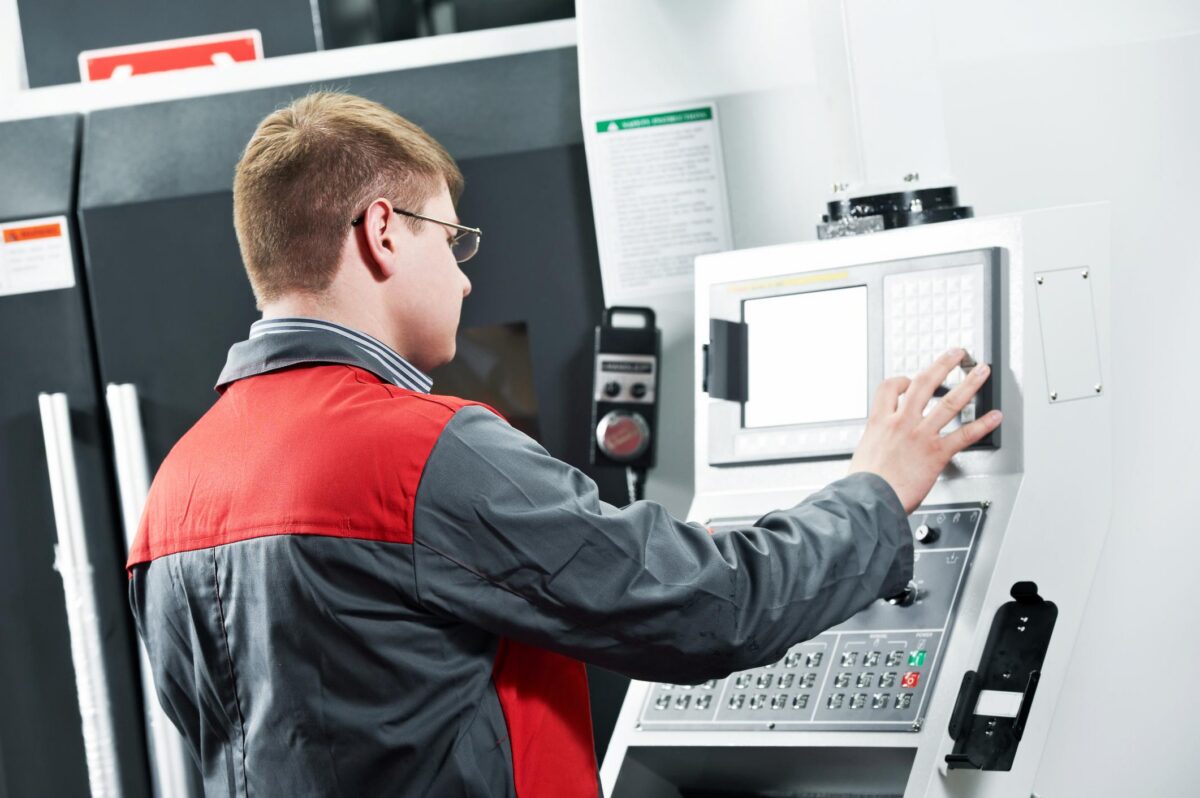
CNC machining plays a critical role in transforming aluminum castings into fully functional, precision components. While casting establishes the near-net shape, machining ensures that critical dimensions, tolerances, and surface requirements are met.
For OEMs and engineers, CNC machining bridges the gap between raw castings and finished parts ready for assembly. It enables tight tolerances, repeatable accuracy, and consistent performance across production runs.
Why Is CNC Machining Required After Casting?
Aluminum casting is efficient for producing complex geometries, but it does not always achieve the precision required for functional features.
CNC machining is used to:
- Refine critical dimensions and tolerances
- Create precision holes, threads, and mating surfaces
- Remove excess material or parting lines
- Ensure flatness and alignment of key surfaces
This process ensures that cast components meet exact engineering specifications and integrate correctly into assemblies.
How Does CNC Machining Improve Dimensional Accuracy?
Dimensional accuracy is essential for components that must fit within tight tolerances or interact with other parts.
CNC machining improves accuracy by:
- Using programmed tool paths for precise material removal
- Maintaining consistent tolerances across large production volumes
- Eliminating variability introduced during casting
This level of control allows manufacturers to produce parts that meet strict design requirements without relying on manual adjustments.
What Types of Machining Operations Are Common?
Aluminum castings often require a range of machining operations depending on part complexity and application.
Common CNC machining processes include:
- Drilling and tapping for threaded features
- Milling for flat surfaces and complex geometries
- Boring for precision internal diameters
- Facing for surface finishing and alignment
These operations are typically performed on horizontal and vertical machining centers, often within automated production cells.
How Does CNC Machining Support Repeatability?
Repeatability is critical in both low-volume and high-volume production environments.
CNC machining systems support repeatability through:
- Pre-programmed tool paths and standardized processes
- Automated tool changes and setup consistency
- Integration with fixturing designed for precise part positioning
This ensures that each part is machined to the same specifications, reducing variability and improving overall quality.
Why Is Integration Between Casting and Machining Important?
When casting and machining are integrated within a single operation, production efficiency improves significantly.
Integrated systems allow for:
- Faster transition from casting to machining
- Reduced handling and transportation between processes
- Improved communication between production stages
- Better alignment of tolerances and design intent
This level of coordination reduces lead times and helps maintain consistent quality across the entire production cycle.
How Does CNC Machining Affect Surface Finish?
Surface finish requirements often cannot be achieved through casting alone.
CNC machining enhances surface quality by:
- Producing smooth, uniform finishes on critical surfaces
- Removing imperfections from the casting process
- Preparing parts for secondary coatings or assembly
Improved surface finish contributes to both functional performance and overall product quality.
What Role Does CNC Machining Play in Complex Components?
Complex aluminum castings often include features that cannot be fully formed during casting.
CNC machining enables:
- Multi-axis machining of intricate geometries
- Precision finishing of internal features
- Accurate alignment of multiple surfaces within a single part
This allows manufacturers to produce components that meet advanced engineering requirements without compromising design complexity.
How Does Automation Enhance CNC Machining Performance?
Automation is increasingly integrated into CNC machining operations to improve efficiency and consistency.
Automated machining cells provide:
- Continuous operation with minimal manual intervention
- Consistent cycle times across production runs
- Reduced risk of human error
- Improved throughput for high-volume production
These systems are particularly valuable in maintaining production schedules and ensuring on-time delivery.
How Does CNC Machining Contribute to Overall Quality?
CNC machining is a key contributor to overall part quality because it directly controls the final dimensions and surface characteristics.
Quality benefits include:
- Tight tolerance control
- Consistent part-to-part accuracy
- Reduced need for rework or adjustment
- Improved fit and function in assemblies
When combined with controlled casting processes, CNC machining ensures that finished components meet both performance and reliability expectations.
Conclusion: CNC Machining Completes the Casting Process
Aluminum casting and CNC machining are not separate processes but complementary stages of a unified manufacturing system.
Casting provides the foundational shape and material properties, while machining refines the part to meet precise engineering requirements. Together, they enable the production of high-quality, repeatable components at scale.
Ready to Improve Precision in Your Aluminum Components?
If your application requires tight tolerances, consistent quality, and reliable performance, CNC machining is a critical part of the solution.
At Watry Industries, CNC machining is fully integrated with casting operations, supported by automated systems and process control to deliver precision components from concept through completion.
Speak with our team to discuss your machining and casting requirements.